Fake evite scam emails are circulating the internet in which users report receiving an invitation from an unknown person and irregular locations.
These fake evite scams are designed to look legitimate and real messages, in order to lure users to various occasions ranging from parties, celebrations, meetings and weddings.
The scammers also target individuals like co-workers, staff, social media friends and family members. It has become so rampant in 2026 because of a cybersecurity scam gaining access to users’ emails and phone numbers with AI driven tools.
Once users click the fake evite link you may be redirected to un verify websites, phishing scam sites and gain access to user personal information.
In this guide you will learn the followings:
- How the fake evite scam works
- Common warning sight to check out for
- How to tell if an evite email is real or scam
- How you can stay protected from all forms of fake invitations email.
Understanding how these scammers operate will help you to avoid becoming a victim and to stay safe online.
What Is the Fake Evite Email Scam?
This is an email invitation which users will be asked to attend a party or click an invitations link in order to connect with the sender.
Clicking these fake invitations links can expose users to downloading viruses into user mobile phones, tracking of personal information and unwholesome activities.
How the Fake Evite Scam Works (step by step)
Step 1: Access to user personal information
Before these scammers send invitations messages, they will gain access to users personal information or contact information like emails and phone numbers. This makes it possible to send messages to users.
Step 2: Chick baits
After accessing users personal information, these scammers find clickbait to use like familiar names, real parties, and occasions to deceive users. That is why many users fall for the trick as it resembles a real invitation message.
Step 3: Sending emails
Sending emails like “You are invited to our party”, and many other invitations messages that look real in order to catch attention and trust the sources.
About 50% of the internet users report these emails claiming to be friends, co workers and family members, which makes them not be able to differentiate between real and fake evite scams.
Step 4: Inserting clickable link
Inserting phishing links is a strategy used by the scammer, in order to gain access to account details, tracking user mobile phones, and installing viruses to their applications.
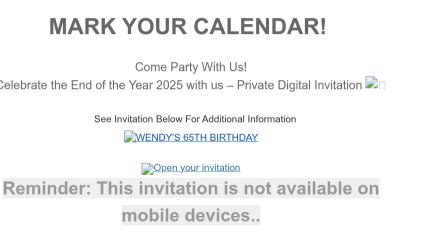
These links look more like broken links, misspelling, and along with a bad grammar present in the links.
Step 5: Tracking victims details
After users click these links, this gives scammers access to user account details, tracking personal information and downloading malware to their mobile applications.
By following these steps, you will understand how fake evite scam works in order to stay safe and protect your information.
10 Common Signs of a Fake Evite Email
- Using un verify links
- Asking users for password to access the emails
- Asking user to send money in order to attends
- Un verify locations
- Un verify sender details
- Using bad grammars
- Inserting suspicious button
- Asking user for their account details
- Link that is directing user to phishing websites
- In ability to verify the invitation through the evite official portal.
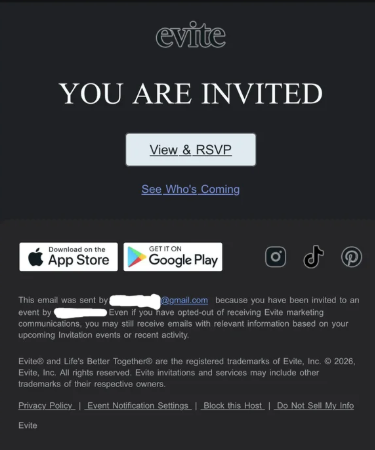
Examples of Fake Evite Scam and user experiences


What Happens If You Click a Fake Evite Link?
- Tracking users personal information
- Gain insight on user account details
- Downloading virus to user mobile applications
- Fraudulent activities
- Gain access to victims bank details
- Phishing scam
- Installing malwares.
How to Tell if an Evite Email Is Real or Fake
A real invite mails use well detailed sender details, no broken or irregular links and not asking for user account details. Real invitations also insert verified locations, detailed information about the party and no click bait.
While a fake evite scam usually contains unverified sender address, irregular links, asking for user account information and login passwords to access the mails. Also fake invitations usually used incorrect spelling, bad grammar in word constructions and no exact locations.
How to Protect Yourself From Invitation Email Scams
- Do not attend the party you cannot verify the sender address
- Do not click irregular links inserted to the fake evite mails
- Do not disclose your login details
- Always verify the party before attending
- Ensure the location is clearly stated
- Protect your bank account details
- Avoids emails offering good to b true offer
- Avoid invitation emails with unfamiliar names
- Inform friends and families about invitations
- Report suspicious email to the nearest authorities.
How to Report Fake Evite Scam Emails
Report fake evite to the official authorities like the pishingscam.com, followed by tracking the sender address. You can also report to the nearest security office in your area.
Stay Safe From Fake Invitation Scams in 2026
As all been discussed so far, users are advised to verify sender information thoroughly and all forms of invitations before attending.
Moreover, following current trends across the internet will make you understand how these scammers operate.
FAQs
Is Evite itself a scam?
No, evite itself is not a scam, however scammers use these methods to send fake invitation messages to users in order to perform unwholesome activities.
Can fake Evite emails install malware?
Yes, it can install malware after users have clicked the link inserted to the mail and gain access to their mobile applications.
Why am I receiving fake invitation emails?
You are receiving, these fake invitations emails because scammer use AI generated tools to send emails to millions of users across the internet in order to gain access to users details.
Related Scam Alerts
- Fake CAPTCHA Scam Explained: How Fake Verification Pages Trick Victims
- Julie Haas Sent You Ft 1 HUF Scam Explained – What You Should Know
- Elon Musk Romance Scam 2026: How Fake Celebrity Accounts Trick Victims
- Fake Payment Email Scam: “You’ve Been Paid” But No Money Received?
- SJ3 Norman Enterprise PayPal Scam Explained: Fake Payment Alert Warning